#029
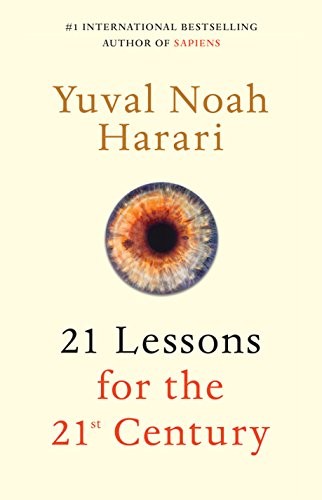
21 Lessons for the 21st Century
The beginning of this book was very much different than the end. The problems that Yuval presumes will arise for humanity aren’t anything simple to resolve or even easy to understand. They are wide in scope, and often require a new lens of reality in order to consider. So he does his best in demonstrating the different lenses we could view the future with, and I believe he does a good job.
He explains the danger of certainty. He outlines how humanity uses narrative, story, or fiction to shape our interaction with reality. He understands that the solution isn’t as simple as writing a book, letting the readers digest it and voila everything is solved. It’s a nuanced situation we find ourselves in, and he actually does very well detailing the nuances.
The examples he give are easy for a layman to relate to, and they even open territory that the philosopher is so used to navigating. He attempts to unite both spaces, showing that these aren’t confined to specific professions, but they concern us all.
And he concludes with anecdotal testimony to how he arrived at his position, what has helped him in the present, namely, he goes on to describe how the Self that we autonomously form a narrative for isn’t as stable as it seems, and that meditation can open yet another perspective for us to approach reality through. He tries to explain that the mind, or consciousness, is one of the most mysterious phenomena available to us, and exploring it is available to everybody.