#129
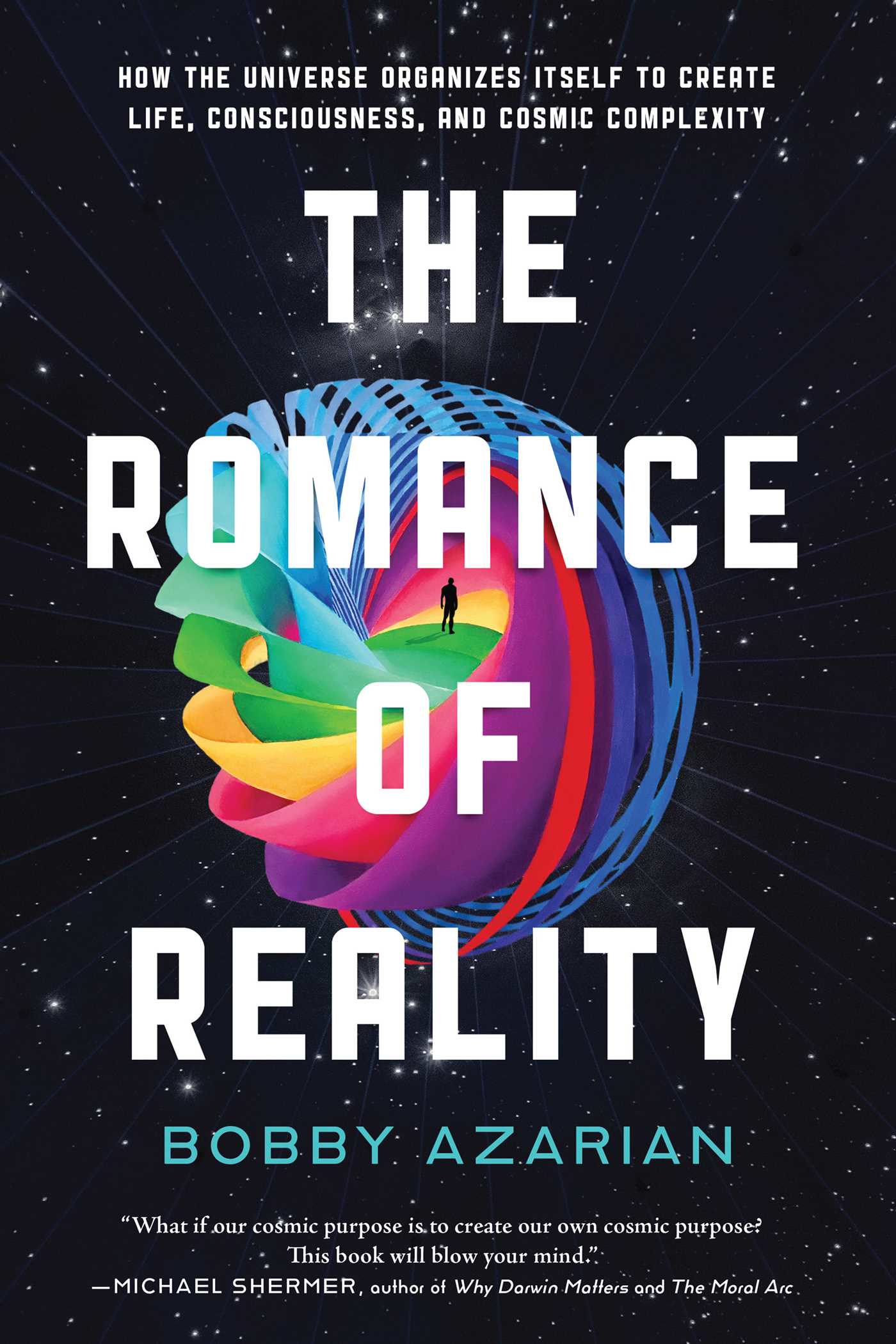
The Romance of Reality
This is probably one of the coolest books I’ve ever read. It ties together a lot of intuitions I already had and grounds them in some science — science that isn’t completely established, it’s still kind of speculative, but it’s more tangible than just my own intuitions and observations. It’s a spiritual book, and a philosophical one, but it’s also very generalist and autodidactic. It weaves together biology and information science, and eventually it even takes on the hard problem of consciousness. I loved it. It was pretty easy to follow, not because the content is simple but because the reasoning is coherent. I could see the connections between things, to the point where it started changing how I see life. I think that’s the point of the book: to change people’s perspectives. It changed mine.
Maybe one of the most important parts is that it wants you to look at the whole. Not one organism but the whole biosphere, all of Gaia, and not as one slice or one frame but as a process, and the process is inherently holistic. It’s a series of interconnected events that all blur together. We too easily look at humans as something separate, like we’re each a separate person, separate from reality, from each other, from nature. But we’re an intimate form of nature. It’s not like we’re some separate process. It’s all connected. And that includes things we’d call inanimate. A tornado or a hurricane, that spiral is energy gradients and dissipative structures. Then you look at a tree and see the same thing: an energy gradient coming off the sun, and the tree is like a tornado or a hurricane, just intimately formed to dissipate sunlight.
There’s also a section where he gets into whether this might be a created universe, leading up to Darwinian evolution on a cosmological scale. I’ve loved the idea since I was a kid that a black hole might be one side of a big bang, two sides of the same coin, a big bang is just a white hole. One of the things he explores is how the cosmological constants look finely tuned, which makes it look like a designed or created universe. And if we’re living in a simulation, an intelligent creator is essentially the same question as a creator God.
It made me think maybe we are in a created universe, a simulation, whatever. Maybe there is a god. But maybe there are levels to godhood. I think consciousness is the ultimate root of reality, the ultimate form of self, the foundation of existence and of any creation. So an intelligent creator, a god or a simulation constructor, would have to be conscious to create anything. It’s almost a chicken-and-egg problem. So the gods we think of as creator gods are actually demigods, and the ultimate God is just consciousness itself, which is fundamental to existence.
I’d definitely recommend it, even to people who aren’t spiritual or into philosophy. It’s very worth the read. It does have a high bar, it gets scientific and into the weeds, and there are parts I should probably reread, but it’s a very good book. It makes me want to read more of what Azarian has written, and some of the books he mentioned.
The way he ends it stuck with me: we are modelers, modeling reality, and modeling other modelers. And when you expand that to include being an individual in a society, the teleology of things, it changes things. It has an effect.