#117
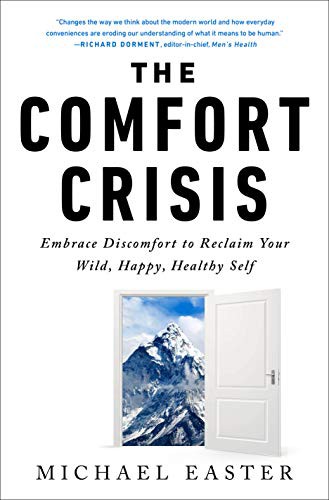
The Comfort Crisis
This was a really good one. The central idea, “comfort creep,” isn’t exactly a secret. We all know society is more comfortable than the world we evolved in. But Easter’s point is that constant comfort costs us something, and the value is in actually becoming aware of what we lose: never sitting with boredom, never being cold, even exercising in an air-conditioned room doing the same repeatable movements that look nothing like how our bodies were meant to move. The book is really about getting back closer to the conditions we evolved for.
It hit me harder than I expected, especially around nature. I’ve always been a computer boy, but I’ve been a nature boy too, more and more lately, and this reinforced a dream I’ve been circling: not just a house in the woods, but a piece of land I can build on and share with others, a kind of retreat from the digital, with room for things like cooking and dancing and plain human embodiment. Smaller takeaway: I need to stand at my desk instead of sitting all day and “making up for it” with walks.
One thing I kept thinking is that Easter wrote this around 2020, and if he wrote it now there’d be a whole section on AI. The comforts he covers mostly affect the body. AI has the potential to do the same to the mind, to our critical thinking, on a much larger scale. The challenge is making sure technology augments and extends us rather than just smoothing everything into comfort. That’s personal for me. I write software for a living, usually in service of a bottom line rather than human health, and the book left me genuinely unsure how to use these tools well. Which is its own small irony, since I’m dictating this very reflection into a transcription app. There’s real value there. I just want to get better at telling what’s healthy from what’s only comfortable.